


Photo:Hina Kurosaka
Tappei Noguchi × Octopus ∞ Projects Octopus Mikoshi
Performance
Information
1. 10/31(Sat) 20:40 - 21:30
2. 10/31(Sat) 23:30 - 11/1(Sun) 0:20
3. 11/1(Sun) 1:30 - 2:00
1, 2. Seijoki-dori
3. Roppongi Hills 66 Plaza
Free
Detail
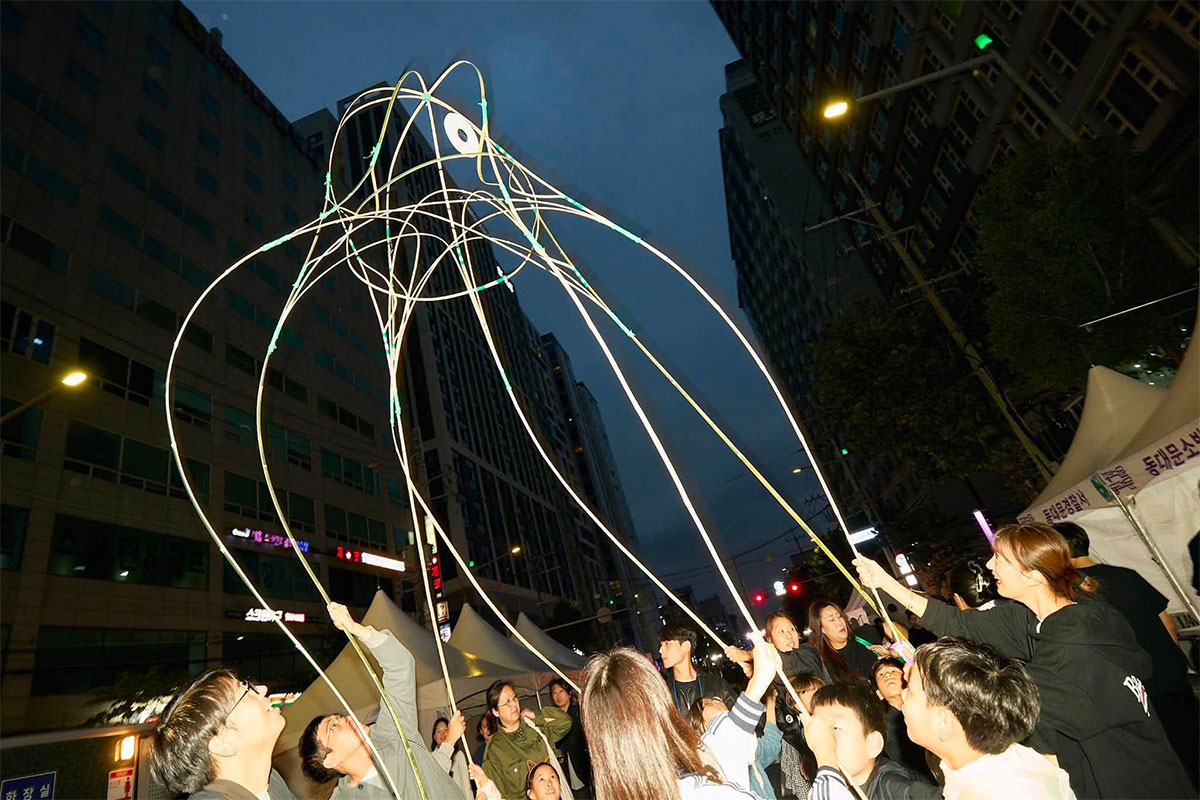
We will present a street performance featuring an octopus portable shrine (tako-mikoshi)—carried by eight people—as it undulates and drifts through the city. Working alongside guest artists who specialize in street performance and improvisational expression, as well as a group of performers recruited from the general public, we have developed a series of acts that introduce new forms of play into the urban landscape. These acts are inspired by Roger Caillois’s four categories of play: agôn (competition), alea (chance), mimicry (imitation), and ilinx (vertigo). The final works will be performed throughout the streets of Roppongi, accompanied by various spontaneous happenings.
Guest Artists: Jun Aoyagi, Natsuki Iwata, Karen Kitazawa, Neone Sugimoto, Mami Tanimoto, Ippei Yonezawa
Map
Artist
Tappei Noguchi × Octopus ∞ Projects
Ryuhei Noguchi
Born in Tokyo in 1992, Noguchi is an art explorer. His work centers on the theme of the archipelago, exploring concepts of movement and co-alterity (being together while remaining distinct). Notable projects include Tire-Pulling—walking around various southern islands while dragging a tire—Octopus Mikoshi—a project where participants gather by likening themselves to the body and mind of an octopus—and Chest of Drawers Dance, which involves transporting the dressers of the deceased to the sea.
Octopus ∞ Project
This initiative was established with the goal of transforming Octopus Mikoshi—a project that explores the relationship between the individual and the collective by likening a human gathering to the body and mind of an octopus (an animal whose individual limbs are said to possess independent intelligence)—into a common entity that will endure for the next 1,000 years. The project focuses on designing a cultural ecosystem where practices are open-sourced, local initiatives are archived, and individuals from diverse professional fields and backgrounds can engage autonomously to generate new forms of practice.